Vibe Coding a Prototype
A journey of discovery.
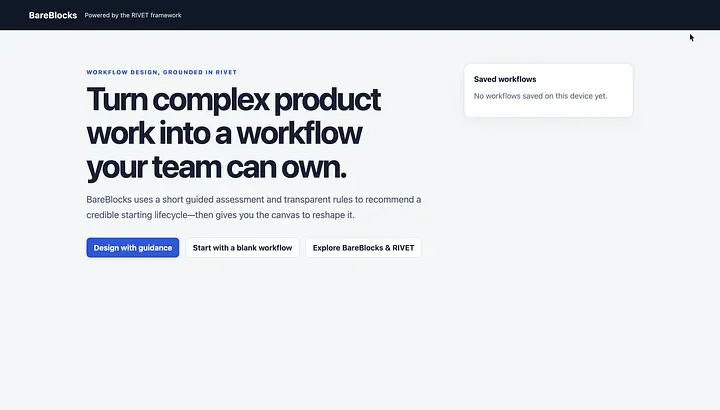
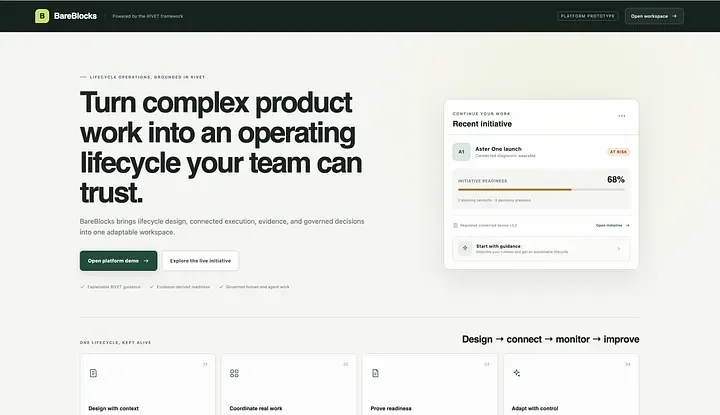
Continuing on from my last article about Cursor models, Sol performed the best so I moved the continuation of the project to Codex. Starting from where I left off with Cursor I asked the Codex Chadling to review and recommend updates that would move the project forward:
Review code and suggest changes. There have been some significant updates to the project since the last time we worked on it. Review the current prototype implementation as well as the built_prompt, product_platform brief and project_overview_files and make update suggestions to further build out and make more robust.
For me, I like the way it communicates. It reviewed, came up with a comprehensive plan to make concrete updates. Love the opening overview of the plan:
The prototype is visually convincing and the separation behind PlatformClient is a good foundation. The main weakness is semantic honesty: several screens imply platform behavior that the mock does not actually perform. I would prioritize correctness and one complete customer journey before adding more surface area.
Plan review and build approved.
The outcome is good, not as much as I expected but a strong step in the right direction. Changes include:
- Added a guided setup journey with deterministic blueprint recommendations
- Separated immutable blueprint definitions from mutable live lifecycle
- Rebuilt proposal execution so all three displayed changes are applied atomically, with truthful receipts and version/idempotency checks
- Added a proper semantic review dialog showing exact before/after changes
- Added dependency arrows, impact tracing, mode-specific block details, and improved accessibility
- Added runtime contract validation and an optional real backend adapter
- Strengthened saved-workflow validation and migration handling
- Aligned the documentation hierarchy, prototype contract, walkthrough, and minimum credible product slices
The biggest positive change was surfacing the dependencies and impacts. What turned out weird is the guided setup journey Chadling brought back from the dead but in a very unuseful way.
Next Step Improvements:
- It wasn’t clear from the landing page exactly how you enter the guided assessment and I wouldn’t have known it was there somewhere if the plan hadn’t called it out as a key step and outcome.
- The assessment is not really an assessment but rather an “initiative context” and “recommendation”.
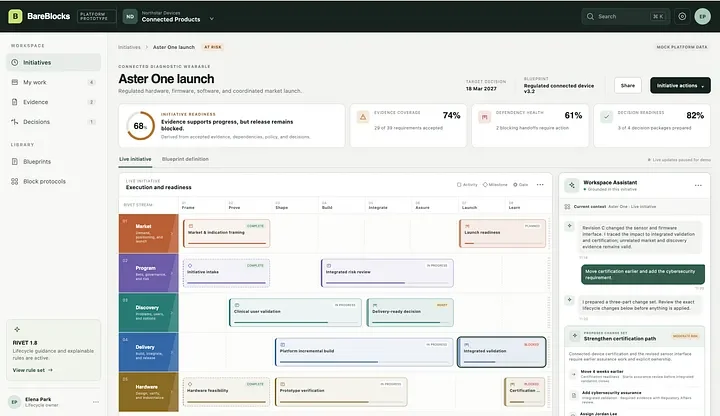
Sol 5.6 with Codex CLI.
Those issues are what I worked on next but it was a change for me working with the Codex interface, or lack of. I am use to working in a IDE and switching to a CLI editor at first felt like I was somehow too removed from the code – reviews seemed to hands off and I liked the Cursor Design Mode.
What I want to avoid is needing to go to another application like lovable or adobe to provide visuals or annotations that would help guide the Chadling in the direction I want. With the CLI I worried that I would have to be more precise in my language because I had very low confidence in the creativity of the models. I don’t think we are yet at the stage where there is a one stop shop to software development and UX workflows, to build robust applications it is still necessary to have knowledge of multiple different platforms and technologies in order to properly accomplish your goal. But I love pressure testing the topic.
I was correct and incorrect, being knowledgable about UI terms is very helpful but the current models are so reliable that a little goes a long way. The goal of this prototype is not design or BE/FE connection, the goal is to show userflow, high level design, archtitecture and functionality. For the actual implementation, after team approval, this will be done by the professionals, I’m just the product manager (ah how this role has changed in the last few years, but that’s another discussion entirely). Long story short, I love Codex CLI.
Issues:
- Update userflow through assessment.
- On the landing page move the “start with guidance” button from under the recent initiative to replacing the explore the live.
- The guided assessment should have the workspace assistant to the left.
- Workspace assistant should move to the left side of the screen.
- The block configuration popup should appear to the right.
The Codex CLI worked surprisingly well. Additionally, the Chadling verified that the app was responsive, without being prompted – I like it.
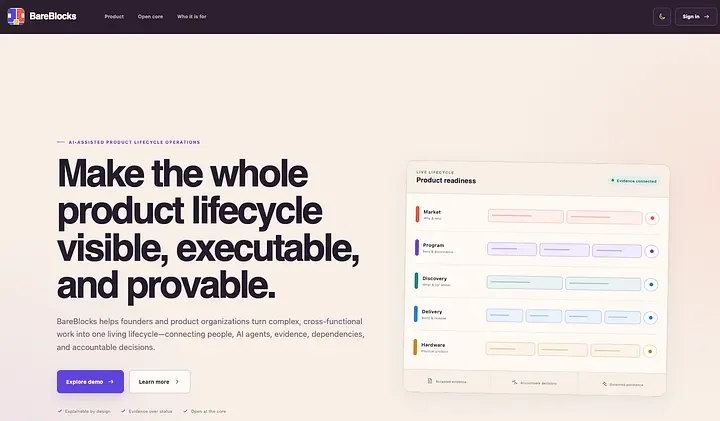
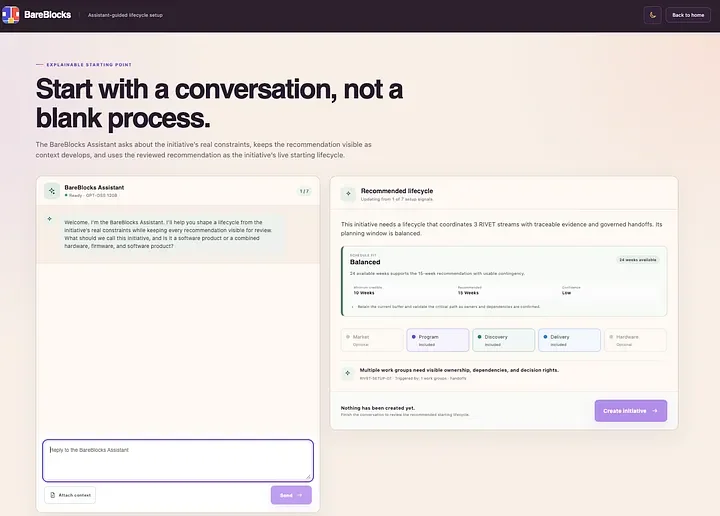
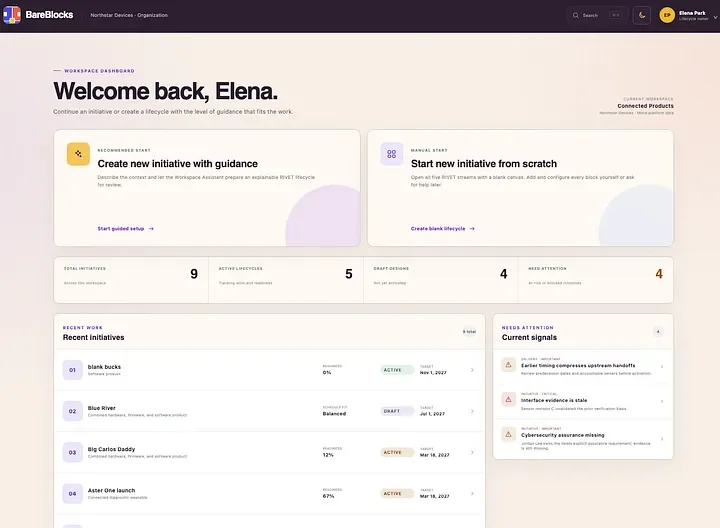
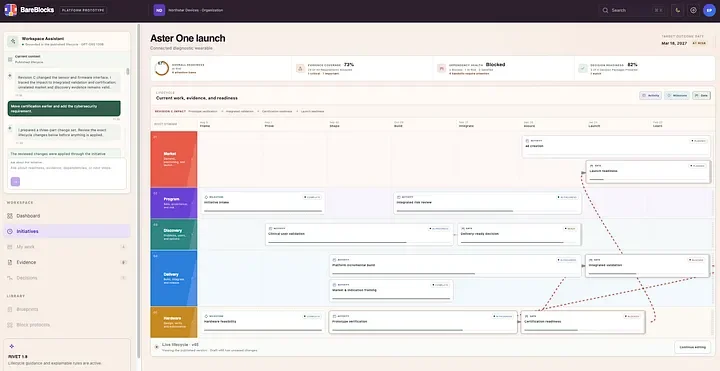
Updated prototype with Codex CLI.
This outcome gave me a good idea of how far these tools have come and how much can actually be accomplished through 1 tool instead of multiple. It is definitely not a replacement for a team that has experts, and I definitely don’t think that a product manager can replace a dev team (unless your goal is creating slop) but I do think it’s a good way to start creating creative ways to spur collaborative conversations.
This prototype isn’t done yet, we still need to incorporate the agent, update the design and solidify the agent functionality before we present it to anyone, but it gets it to the point where creativity can flow outside a bubble.
Next steps: Agent integration, design updates, project creation workflow, durable object design.

Erinn Mahoney
Lead Scrum Master & Founder
Passionate about agile transformation and building high-performing development teams. 10+ years experience in software development and agile coaching.
More Articles
View All