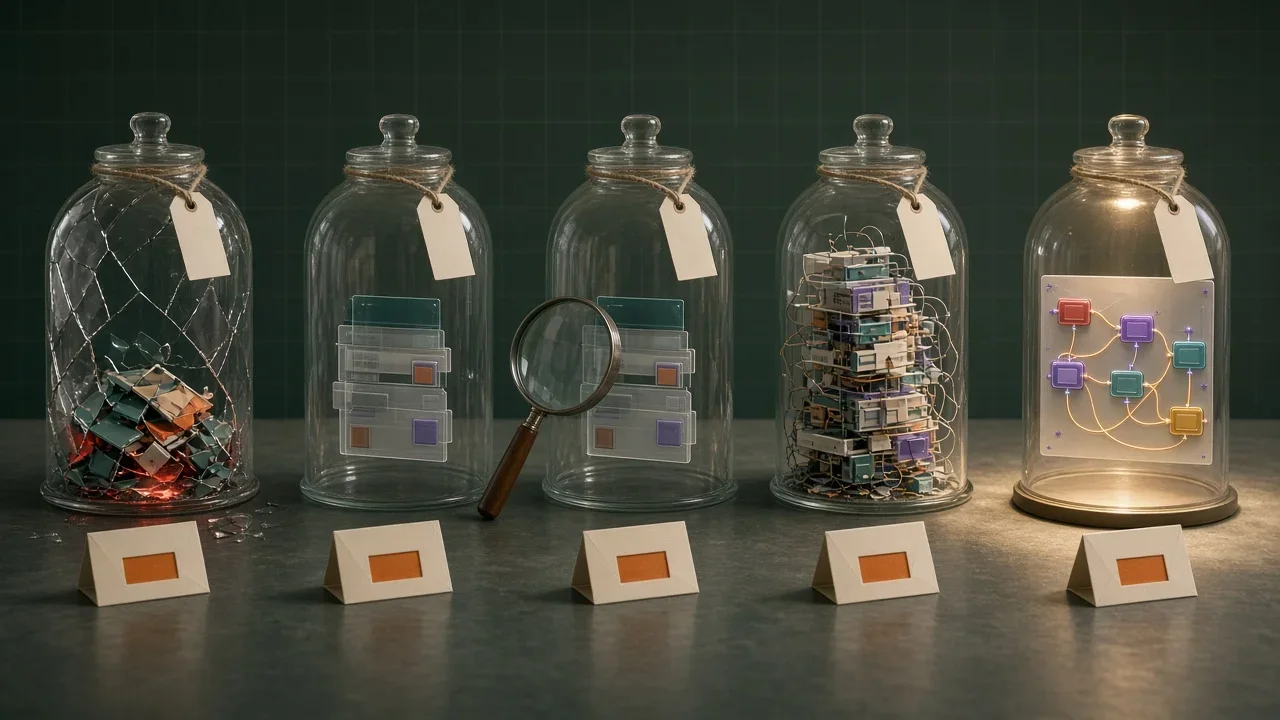

Performance Problems Are Usually Product Problems First
Slow products are not always slow because the code is bad. Often, performance problems start with product decisions: too much scope, too many scripts, unclear priorities, and nobody owning the user experience after launch.
When a product feels slow, everyone looks at engineering.
Fair enough. Sometimes the code is bad. Sometimes the queries are careless. Sometimes the page ships half the internet before letting the user click a button. Sometimes the problem really is technical.
But not always.
A lot of performance problems start much earlier than the code.
They start when every stakeholder gets one more thing above the fold. They start when analytics, experiments, chat widgets, session replay, ad pixels, and personalization scripts all become "must-haves." They start when nobody wants to decide which feature matters most, so everything ships together and the user pays the tax.
Slow products are often the result of product choices.
Engineering may have to fix the symptoms.
But the cause is usually shared.
Performance Is a Product Feature
Speed is not a technical luxury.
It is part of the product experience.
If a user cannot load the page, complete the form, understand the state, or trust that something is happening after they click, the product has failed in a very practical way.
It does not matter how good the roadmap looked.
It does not matter how clever the architecture is.
It does not matter that the feature technically exists.
If the experience is slow enough to make users hesitate, abandon, retry, or open a support ticket, performance has become a product problem.
That means product has to help own it.
Not just engineering.
Not just "the frontend person."
The team.
The Page Is Slow Because the Page Is Trying to Do Too Much
One of the simplest performance questions is also one of the most uncomfortable:
Does all of this need to be here?
Teams love to optimize what they refuse to simplify.
The hero needs a video. The dashboard needs every chart. The product page needs reviews, recommendations, offers, comparison tables, personalization, tracking, a chat widget, and three announcement banners because each department has a very reasonable reason their thing matters.
Individually, each request makes sense.
Together, they create soup.
Before asking engineering to make the page faster, ask:
- What does the user need first?
- What can load later?
- What can move to another step?
- What can be removed entirely?
- What is important to the business but irrelevant to the user's current task?
- What are we showing because nobody wanted to say no?
Performance improves when product makes priority visible.
Not everything can be primary.
That is what primary means.
Third-Party Scripts Are Product Decisions
Third-party scripts are sneaky.
They arrive as small requests.
"Can we add this analytics tag?"
"Can we test this marketing widget?"
"Can support have this chat tool?"
"Can growth run this experiment?"
Each script has a business case. Each one promises insight, conversion, attribution, support, or optimization. Then one day the page is dragging around a little marketplace of vendors before it can become usable.
This is not only an engineering concern.
If a third-party script affects performance, privacy, reliability, or user trust, it is a product decision.
The team should know:
- Who requested it
- What value it provides
- Where it loads
- Whether it blocks the user
- What data it collects
- How often it is reviewed
- Who removes it when it stops being useful
If nobody owns a script, the script owns you.
That sounds dramatic, but check most mature products and you will find at least one forgotten vendor tag quietly doing cardio in production.
Performance Budgets Are Really Decision Budgets
Performance budgets sound technical.
They are actually decision tools.
A budget says: this experience has limits, and when we add something new, we have to make a trade-off.
That is healthy.
Without a budget, teams make performance worse one reasonable addition at a time.
A useful budget can include:
- Maximum page weight
- Largest image or media limits
- JavaScript limits
- Core Web Vitals targets
- Third-party script limits
- Time-to-interactive expectations
- API response expectations for critical flows
The point is not to turn every planning meeting into a lecture about milliseconds.
The point is to make trade-offs explicit.
If marketing wants a heavy embed, maybe something else has to move.
If product wants personalization above the fold, maybe the team needs a loading strategy.
If leadership wants a dashboard with every metric, maybe the default view needs to show less and reveal more on demand.
Budgets make performance a conversation before it becomes a fire.
Users Do Not Experience Your Org Chart
Performance often gets worse at organizational boundaries.
One team owns the page. Another owns the API. Another owns authentication. Another owns analytics. Another owns search. Another owns the design system. Another owns the content platform.
Each team optimizes its piece.
The user experiences the whole thing.
That is where teams get surprised.
Everyone's part is "within acceptable limits," but the total experience is still slow.
This is why performance needs an end-to-end owner for important flows.
Not necessarily one person forever.
But someone has to be able to say:
- This is the user journey we care about
- This is what good feels like
- This is where the time is going
- This is the trade-off we are making
- This is who needs to change what
Without that ownership, performance becomes everyone's concern and nobody's job.
That always goes well, by which I mean it absolutely does not.
The Fastest Thing Is the Thing You Do Not Build
There is a performance technique that beats caching, compression, bundling, lazy loading, and clever architecture.
Do not build the thing.
Not every feature needs to exist.
Not every field needs to be required.
Not every dashboard needs real-time updates.
Not every workflow needs a modal, drawer, confirmation, preview, wizard, tooltip, tour, and success animation.
The fastest interaction is the one the user does not have to suffer through.
That is not an argument against rich products. It is an argument for restraint.
Product restraint is performance work.
So is saying:
- This can be a link, not an entire flow
- This can be async, not blocking
- This can be a summary, not a full table
- This can be progressive disclosure, not everything at once
- This can wait until we prove users need it
Teams underestimate how often the best performance improvement is a product decision with no code attached.
"Just Optimize It" Is Not a Plan
"Make it faster" is not a requirement.
It is a wish.
A better performance request includes:
- Which user journey matters?
- What is slow today?
- How slow is it?
- Where is the pain felt?
- What target would be acceptable?
- What trade-offs are allowed?
- What cannot change?
- How will we measure improvement?
If a team cannot answer those questions, engineering can still poke around and probably find something.
But the work will be less focused, harder to prioritize, and easier to argue about.
Performance work needs a definition of done like everything else.
Otherwise the team ends up tuning random parts of the system while the actual user pain sits untouched.
Measure What Users Feel
Lab scores matter.
But users do not live in lab scores.
They live on old phones, busy networks, company laptops, shared Wi-Fi, overloaded browsers, and real workflows with messy data.
Performance work should include both system measurements and user-facing signals:
- Page load and interaction metrics
- API latency for critical requests
- Error rates and timeouts
- Abandonment points
- Support tickets about slowness or confusion
- Conversion or completion rates
- Real-user monitoring where appropriate
The goal is not to collect graphs because graphs look serious.
The goal is to connect performance to user outcomes.
If the page gets faster but users still abandon the flow, maybe speed was not the only problem.
If a small speed improvement meaningfully improves completion, maybe the product has been taxing users more than anyone realized.
Either way, the team learns.
Performance Review Belongs in Product Review
Performance should not only show up after launch or during an incident.
It should be part of product review.
When reviewing a feature, ask:
- What will this add to the page or flow?
- Does it block the user's main task?
- What loads immediately?
- What can wait?
- What happens on slow connections?
- What happens when an API call fails?
- What third-party dependencies are involved?
- How will we know if this made the experience worse?
These are product questions.
They do not replace technical review.
They make technical review more useful.
Because now engineering is not fighting performance problems alone after every decision has already been made.
A Practical Performance Conversation
If your team wants to make performance healthier, start with one important flow.
Not the whole product.
One flow.
Then ask:
- What is the user trying to do?
- Where does the experience feel slow?
- What does the data say?
- What is on the page or in the flow that does not support the main task?
- Which scripts, requests, or assets are essential?
- Which ones are questionable?
- What can load later?
- What can be removed?
- What target are we trying to hit?
- Who owns keeping this flow healthy after the fix?
That is enough to start.
You do not need a massive performance program before making one experience less painful.
You need ownership, measurement, and the courage to remove things.
Faster Is Usually Clearer
The best performance work often makes the product clearer.
Less noise. Better priorities. Fewer interruptions. Smarter loading. Clearer states. Fewer unnecessary decisions for the user.
That is why performance should not be treated as a technical cleanup item hiding somewhere behind "real" product work.
Performance is product work.
A slow page is not just slow.
It is indecisive.
It is carrying the weight of too many priorities, too many assumptions, too many side quests, and too little ownership.
Engineering can help make it faster.
But the team has to help make it simpler.
That is where the real work usually starts.
Continue Exploring
View All